Stingray Music - 100s of DJs
- 4.6
- Rating
- 1.00M
- Installs
- Free
- Price

 Analysis by App-foxy
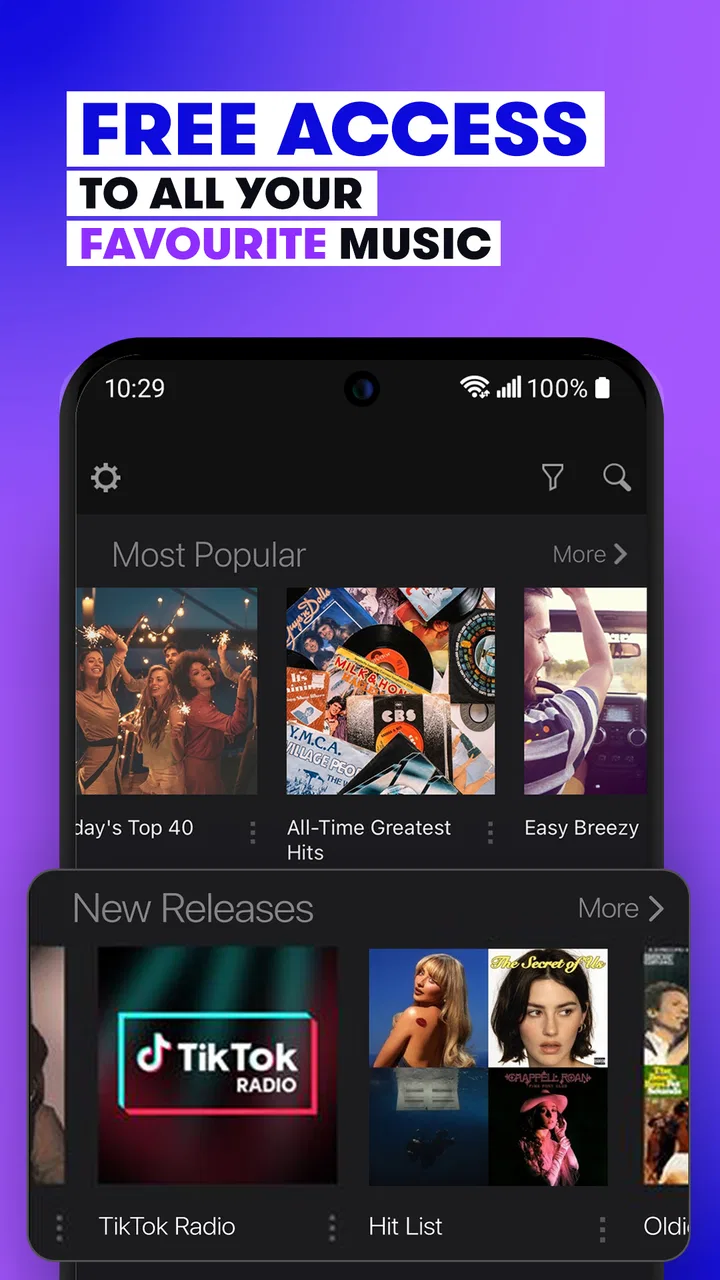
I reach for Stingray Music - 100s of DJs when I want music to fill a room without turning the listening session into a search project. It is a free Music & Audio app from Stingray Group, built around curated channels rather than a personal collection that I have to organize myself. That difference sounds simple, but it changes how useful the app feels during a commute, while cooking, or when friends are over and nobody wants to argue about the next song.
My overall impression is positive, especially for listeners who prefer a radio-like experience with several moods available at a tap. It has a 4.6 average from around 54 thousand ratings and more than a million installs, which gives it a reassuringly established place among Android music apps. Still, I would not recommend it automatically to everyone. If your priority is owning a carefully edited library, controlling every track, or listening to music you have already downloaded, a different kind of service may suit you better.
What to consider before choosing a curated music app
The first question is whether you want discovery or control. Stingray Music is designed for the moment when you know the atmosphere you want but do not have a precise album or artist in mind. I can choose a broad musical direction and let the channel carry the session. That is more relaxed than building a queue, but it also means accepting that the app, not I, decides the exact sequence.
You May Also Like

 Blood Strike: 2.5 Anniversary
Blood Strike’s Loadouts Turn Every Drop Into a Tactical Gamble
A close look at Blood Strike’s custom loadouts: how fast access to signature weapons reshapes its battle royale rhythm, rewards preparation, and narrows the gap between fights.

 Pandora - Music & Podcasts
Pandora’s Music Is Easy to Start, but Harder to Recover
Pandora’s strength is its low-effort path from a seed to a station. Its weak spot is how much confidence it asks you to place in connection, setup, and quiet recovery.

 8 Ball Pool
 Is Built on Rivalries, Rematches, and Routine
A close look at the rivalries, rematches, shared routines, and unanswered safety questions that turn a quick pool match into a persistent mobile community.

 Samsung Music
’s Quiet Strength Is Playing What You Already Own
Its reach comes less from spectacle than from dependable access to a personal library. That simplicity is both the app’s strongest retention engine and its ceiling.

 AccuWeather: Weather Radar
AccuWeather Review: A Quick, Clear Forecast for Everyday Decisions
For everyday plans, the best forecast is the one you can understand quickly. AccuWeather makes rain timing, radar, and local conditions easy to act on, with a few trade-offs.

 Hill Climb Racing
Why Hill Climb Racing Still Turns Crashes Into One More Run
A tiny car, a bumpy hill and one more upgrade: Hill Climb Racing keeps resurfacing because its simple chaos makes every near-miss feel personal.
More From Our News Desk



The second question is how much interruption you can tolerate. A curated channel works best when I am doing something else. It is less satisfying when I am trying to hear one particular song immediately. Before switching from an on-demand music service, I would think about how often I search for specific tracks. If that happens several times a day, the convenience of passive listening may not compensate for the reduced control.
There is also a practical question about paying. The app itself is free, while in-app purchases range from $2.99 to $69.99 per item. I would not treat the free download as proof that every listening preference is covered without extra cost. Anyone considering a purchase should check what the particular option changes and whether it addresses a real annoyance, rather than buying simply because the app is already installed.
Compatibility is straightforward for many Android users: the current version is 9.7.4 and the minimum operating system is Android 5.0. That makes the app accessible on a wide range of devices. I still recommend checking the phone before planning to use it on an older handset, particularly if the device already struggles with newer apps or background audio.
How I judge the listening experience
I look for three things: how quickly I can start music, how easy it is to move between moods, and whether the app remains useful after the first few sessions. Stingray Music makes a strong first impression because its purpose is immediately understandable. I am not asked to begin by creating a detailed library or training a recommendation engine through a long setup routine. I can browse the available listening choices and start with the one that matches the moment.
The important test comes later. A channel is only valuable if it can stay in the background without becoming irritating. In my experience, the curated format is at its best during repetitive tasks. I can leave it running while cleaning, preparing dinner, or working through routine paperwork. The music gives the room some energy without demanding the same attention as a playlist I have assembled track by track.
That convenience has a trade-off. Because the experience is channel-led, I need to be comfortable with occasional choices that are not exactly what I would have selected. I see that as part of the bargain rather than a flaw in itself. The app is trying to remove decision fatigue, not replace a personal music library.
Where the app is especially strong
The biggest strength is the handoff between moods. Instead of searching for several artists and then adjusting a queue, I can move from one curated direction to another. That is useful when the setting changes. A quiet start to the morning may call for something different from a lively kitchen later in the day, and a channel-based app keeps that transition simple.
I also like the way the format supports shared listening. When I play music for other people, I do not have to expose my entire taste profile or repeatedly skip songs that only make sense to me. A broad channel is often a safer compromise for a room with mixed preferences. It gives everyone something recognizable without requiring a group discussion about the playlist.
Another less obvious advantage is that the app can act as a discovery layer without turning discovery into homework. I sometimes find that an on-demand service encourages me to replay familiar favorites because searching for something new takes effort. A curated channel removes that extra step. I may not love every selection, but I am more likely to encounter music outside my usual routine.
For that reason, I think the app is particularly effective for people who say they enjoy music but do not want to manage it. It is also a sensible choice for someone moving from traditional radio who wants more variety in how they listen, while still preferring the feeling of a programmed station over an endless catalog.
A realistic everyday session
Imagine a Saturday when I am preparing food for friends. I want sound in the background, but I am moving between shopping bags, chopping boards, and conversations. Opening a curated channel is quicker than deciding whether to play an album, constructing a queue, and checking that the mood will work for everyone. Once the music is going, I can leave the phone alone and concentrate on the room.
Later, if the atmosphere changes, I can choose another channel instead of rebuilding the entire session. That small saving of attention is where the app earns its place. It is not about a dramatic feature; it is about avoiding a series of tiny interruptions. For me, that is a more convincing benefit than simply having a large selection of music.
The same workflow suits a commute or a home office. I can start listening before the task begins, select a suitable direction, and avoid checking the screen every few minutes. I would still use a more controlled service for a long journey where I need a particular album or want to guarantee that certain tracks are available, but for ordinary background listening, Stingray Music feels purpose-built.
Small habits that make it more useful
I get better results when I choose the channel according to the activity rather than my general taste. A channel that sounds enjoyable while I am relaxing may be distracting during concentrated work. Conversely, something too restrained for cleaning may make the task feel flat. Treating the channel list as a set of tools for different situations helps me avoid judging the whole app from one unsuitable choice.
I also recommend giving a channel enough time before abandoning it. Curated listening is not the same as sampling a playlist for thirty seconds. If I switch constantly, I lose the main advantage of the app and recreate the decision fatigue it is meant to reduce. My preferred routine is to pick a direction, let it run through a meaningful part of the activity, and only change when the mood genuinely changes.
A third useful habit is to keep the app for social or shared spaces, even if I use another service for personal listening. That division makes sense. Stingray Music does not need to replace every music app on my phone to be worthwhile. It can handle the moments when I want dependable atmosphere, while an on-demand library handles deliberate listening.
Where the usual alternatives may fit better
On-demand streaming is the better category for listeners who already know what they want. If I am in the mood for one artist, a specific record, or a carefully sequenced workout mix, searching directly is faster than waiting for a curator to reach the right sound. That kind of service also makes more sense when I want to revisit a song immediately rather than accept the channel’s programming.
Personal music libraries are another strong alternative for people who value ownership and predictability. A local collection can be preferable when I am traveling, managing limited connectivity, or trying to avoid the uncertainty of a live listening session. It also gives me complete control over order and repetition. Stingray Music wins on spontaneity, not on precise personal editing.
Traditional radio remains a reasonable option when I want a familiar broadcast habit with minimal interaction. The advantage of Stingray Music is the ability to move among curated musical directions in an app, but someone who already likes a particular radio routine may not see enough benefit to change. The decision depends less on which format is universally better and more on whether I want broader choice without taking on playlist management.
Algorithmic recommendation services occupy a middle ground. They can learn from my listening and create a more individualized stream, while Stingray Music feels more like entering an already prepared programming environment. I prefer the latter when I want to avoid over-personalization or when I am choosing music for several people. I prefer the former when I want recommendations to follow my own history closely.
This is also where the Teen content rating matters for families. I would not treat the app as a dedicated children’s music space. A parent choosing music for younger listeners should make that decision with the rating in mind and supervise the listening context when appropriate. For teenagers and adults seeking general music discovery, the rating is less of a concern, but it is still worth noticing before installing.
The cost of switching from another music service
Moving to Stingray Music is easy if I am mainly replacing background audio. I do not need to recreate a huge playlist before the app becomes useful. I can install it, choose a suitable channel, and test it during one ordinary task. That low setup burden is one of its practical advantages over services that become valuable only after I have invested time in organizing favorites.
The harder part is giving up control. If I have spent years building playlists for running, studying, parties, or travel, a curated channel will not reproduce that structure exactly. I would keep my existing service for those specialized situations rather than expecting one app to handle everything. In my view, the least frustrating transition is to use Stingray Music alongside an on-demand option at first, then decide whether the extra app is earning its space.
There is also a habit change. With a personal playlist, I may reach for the skip button whenever the mood shifts slightly. With this app, I need to accept that the channel is doing part of the work for me. The more willing I am to let the programming unfold, the more value I get. If I cannot tolerate that compromise, switching will feel like losing a feature rather than gaining simplicity.
The purchase range deserves the same practical approach. Because the app is free to start, I can evaluate the basic listening experience before spending anything. I would only consider an in-app purchase after identifying a specific limitation in my own routine. That keeps the decision grounded in use rather than in the assumption that paying automatically creates a better experience.
Who should use it, and who should skip it
I recommend Stingray Music to listeners who want curated background music, quick mood changes, and a low-effort way to discover something beyond their usual favorites. It is a good match for homes, casual gatherings, work sessions, and commutes where the exact track matters less than maintaining a pleasant flow.
I would also suggest it to someone who feels overwhelmed by large music catalogs. More choice is not always more convenient. If browsing leaves you spending longer choosing than listening, a channel-based app can restore the simple pleasure of pressing play and getting on with the day.
I would skip it as a primary music app if I need offline access, exact song selection, a meticulously ordered playlist, or a library centered on music I already own. Those needs point toward a personal collection or an on-demand service. I would also hesitate if I dislike curated programming in principle, because no amount of channel variety changes the basic trade-off between convenience and control.
My final recommendation
After using it as a practical listening companion, I see Stingray Music as a focused tool rather than a universal replacement for every music service. Its value comes from removing small decisions: I choose a direction, start listening, and let the programming support the activity. That makes it more useful than its simple concept might suggest.
The app is free, comes from the established developer Stingray Group, and has attracted a substantial audience since its release on August 12, 2011. Its current version, 9.7.4, keeps it relevant for compatible Android devices, while the Teen rating gives families an important point to consider. I would install it first as a second music option, test it during cooking or commuting, and then decide whether its curated approach fits my habits.
My clear recommendation is to try it when you want music without playlist maintenance. It is not the right answer for precise, offline, or ownership-focused listening, but it is an easy recommendation for relaxed discovery and shared background sound. If that is the gap in your current setup, Stingray Music fills it with very little effort.
FAQs for Stingray Music - 100s of DJs
01What is Stingray Music - 100s of DJs?
Stingray Music - 100s of DJs is a streaming radio app that offers a broad selection of music channels curated by professional DJs. It covers multiple genres, moods, and listening styles, making it useful for background music, discovering new artists, or enjoying familiar favorites without creating your own playlist. Channel availability may depend on your location and service provider.
02Is Stingray Music - 100s of DJs free to use?
The app may be available to download at no initial cost, but access to its complete channel lineup can depend on your television, internet, or mobile service provider. Some users may need an eligible subscription or account to listen without restrictions. Before downloading, check the current store listing and the provider requirements in your country, since pricing and included features can vary.
03Does the app require an internet connection?
Yes, Stingray Music - 100s of DJs primarily relies on an internet connection to stream its radio channels. Listening over mobile data can consume a noticeable amount of data, especially during long sessions, so Wi-Fi is recommended when possible. The app is designed for online listening, and users should not assume that every channel or program can be downloaded for offline playback.
04What kind of music and channels are available?
The app is designed to provide a wide variety of professionally curated channels, including popular genres, themed selections, relaxing sounds, contemporary hits, and music suited to different moods or activities. The exact catalog can change over time and may differ by region. Because channels are programmed by DJs rather than relying only on personal algorithms, the experience can include unexpected artists and tracks.
05Is Stingray Music - 100s of DJs available on Android and iPhone?
Stingray Music - 100s of DJs may be offered for compatible Android and iOS devices, but availability can depend on the country, operating-system version, and agreements with local service providers. Before installing, review the app store requirements and confirm that your device is supported. You may also need to sign in through an eligible provider to access all available channels and features.
Pros
- Large selection of genre-based stations for different moods.
- Curated programming feels more personal than algorithm-only playlists.
- Simple interface makes finding music quick and convenient.
- Useful for discovering artists beyond your usual listening habits.
- Reliable option for background music at home
- work
- or while traveling.
Cons
- Some stations may not match your preferred music style consistently.
- Streaming can use significant mobile data without a Wi-Fi connection.
- Listening experience depends heavily on a stable internet connection.
- Limited control compared with on-demand music services.
- Availability of certain content may vary by country or region.

Stingray Music - 100s of DJs
Gallery